



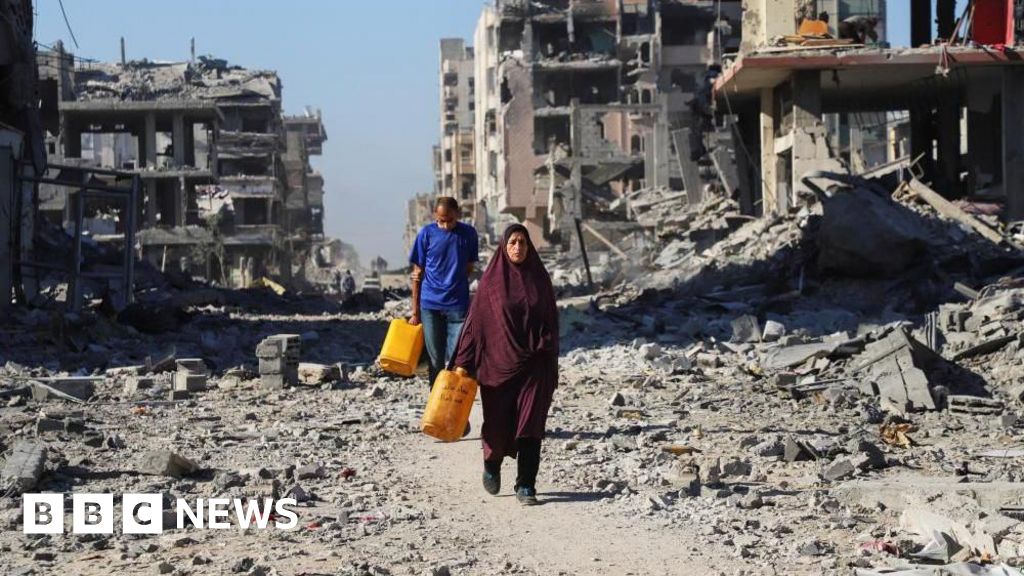
The UN humanitarian chief has called on Israel to increase the number of open crossings into Gaza to facilitate a significant rise in humanitarian aid deliveries. This appeal comes after Israel threatened to curb supplies following delays by Hamas in returning the bodies of deceased hostages.
Tom Fletcher, the UN humanitarian coordinator, emphasized the urgency of both Israel and Hamas adhering to the ceasefire agreement, describing it as “essential that we do not squander the immense progress made” under the US-brokered deal.
Tensions have escalated in Israel due to the slow return of hostages’ bodies, while the critical Rafah crossing between Egypt and southern Gaza remains closed. Inside Gaza, residents have been stockpiling food amid soaring prices driven by fears the ceasefire might collapse.
Humanitarian aid has been flowing into Gaza since the ceasefire took effect on 10 October. However, Israel warned of restricting aid because Hamas failed to return the remains of all 28 deceased hostages by the Monday deadline set in the agreement. Hamas has cited difficulties in locating the bodies.
To date, seven bodies of Israeli hostages have been returned from Gaza, with Hamas announcing plans to hand over two additional bodies shortly. Fletcher stated on social media that Hamas must “make strenuous efforts to return all the bodies of the deceased hostages.” He also insisted that Israel allow “the massive surge of humanitarian aid—thousands of trucks a week—on which so many lives depend, and on which the world has insisted.”
Fletcher urged the opening of more crossings and a “genuine, practical, problem-solving approach” to eliminate remaining barriers. He warned that “withholding aid from civilians is not a bargaining chip.”
The Rafah crossing has largely remained shut since violence erupted following the 7 October attacks. Earlier in the year, it briefly opened during a temporary ceasefire to evacuate wounded Palestinians for medical care. An Israeli military official overseeing Gaza aid, however, insisted that “humanitarian aid will not pass through the Rafah crossing,” confirming no agreement on this point had been reached.
Additionally, the UN chief expressed grave concern over reports of violence against civilians in Gaza, as allegations of masked Hamas gunmen executing eight Palestinians in public spread fear within the territory.
American Central Command head Adm Brad Cooper called on Hamas to halt hostilities against Palestinian civilians. He urged the group to seize “an historic opportunity for peace” by fully complying with the US peace plan and disarming promptly. Hamas maintains it targets “criminals and collaborators with Israel.”
Meanwhile, in Gaza, prices of food essentials have surged as traders and residents prepare for the possibility that the ceasefire will not last. Local accounts describe hoarding practices aimed at driving up prices, generating shortages.
A displaced Gaza resident recounted, “Every time we start to feel safe, new threats appear, and we fear the war will start all over again.” She noted a spike in demand and prices for flour, oil, and sugar despite a roughly 30% price increase. Another resident described ongoing violence and dire living conditions, stating, “There is constant shooting in our area, and life there is completely destroyed.”
This unease unfolds as mediators continue talks in Egypt to bridge gaps between Israel and Hamas, ensuring the first phase of the ceasefire holds.
The Israel Defense Forces confirmed that after examining four bodies handed over by Hamas overnight, one did not match any known hostage. The other three were identified as Tamir Nimrodi, 20, Eitan Levy, 53, and Uriel Baruch, 35. Under the ceasefire terms, Israel agreed to exchange 15 Palestinian bodies for every Israeli hostage deceased if Hamas could not locate all remains by the initial deadline.
Israel has returned 45 Palestinian bodies, bringing the total released to 90, according to Hamas’ health ministry.
Anger remains high in Israel over the hostage bodies’ delayed return. The son of Amiram Cooper, a deceased hostage still held by Hamas, shared that families are striving “to find the strength somehow to pick ourselves up… and continue the fight.” He added, “It’s clear to us that they [Hamas] could have and should have released more and they’re playing games.”
© Millenium TV