



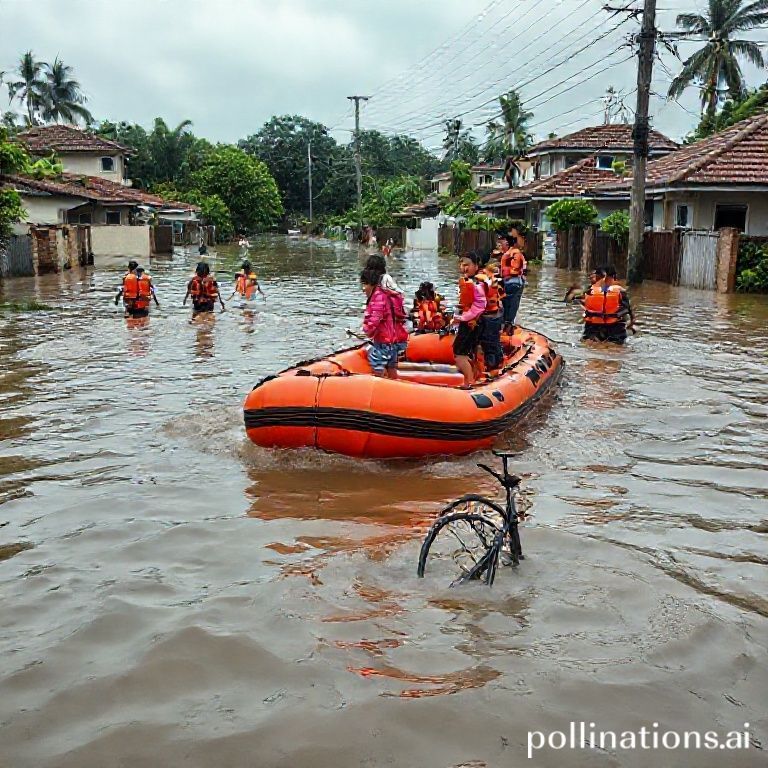
Southeast Asia is reeling from some of the heaviest rainfall in decades, leading to catastrophic flooding and landslides across Indonesia, Thailand, and Malaysia. Hundreds are confirmed dead, with fears the toll could rise as countless individuals remain missing and millions are affected by the widespread devastation.
On Indonesia’s Sumatra island, the death toll has tragically surpassed 300, and dozens are still unaccounted for. Rescue operations are ongoing, though hampered by major road closures and only partial restoration of internet and electricity services. An exceptionally rare tropical cyclone, named Senyar, triggered devastating landslides and submerging thousands of homes. A resident in Aceh Province, Arini Amalia, described the harrowing experience, stating, “The current was very fast, in a matter of seconds it reached the streets, entered the houses.” She and her grandmother sought refuge, only to find their home completely swallowed by floodwaters the following day. Another survivor, Meri Osman, recounted being “swept away by the current” and clinging to a clothesline until rescue. Millenium TV has learned that in Tapanuli, the worst-affected area, residents have reportedly resorted to ransacking grocery stores in a desperate search for food, while pressure mounts on Jakarta to declare a national disaster to expedite relief efforts.
Thailand has also been severely impacted, with 160 reported deaths across 10 provinces and over 3.8 million people affected. In the southern province of Songkhla, water levels rose by three meters, contributing to 145 fatalities in one of the region’s most severe floods in a decade. The city of Hat Yai experienced an unprecedented 335mm of rainfall in a single day, marking the heaviest downpour in 300 years. As floodwaters receded, the death toll sharply increased, overwhelming local morgues and forcing the relocation of bodies to refrigerated trucks. Thanita Khiawhom, a Hat Yai resident, expressed frustration, saying, “We were stuck in the water for seven days and no agency came to help.” The government has since pledged relief measures, including compensation of up to two million baht (approximately $62,000 USD) for households that have lost family members, while tens of thousands have sought refuge in shelters.
Neighboring Malaysia, though reporting a lower death toll of two, has experienced equally devastating damage. Parts of northern Perlis state remain submerged, forcing tens of thousands into temporary shelters. Separately, Sri Lanka has been battered by Cyclone Ditwah, resulting in over 130 deaths and approximately 170 individuals missing. Officials there have declared a state of emergency, reporting more than 15,000 homes destroyed and 78,000 people displaced. A third of the country is reportedly without electricity or running water.
Meteorologists suggest the extreme weather in Southeast Asia may be a result of the interaction between Typhoon Koto in the Philippines and the unusual formation of Cyclone Senyar in the Malacca Strait. While the region experiences an annual monsoon season, experts note that climate change is altering storm patterns, leading to increased intensity and duration of the season, resulting in heavier rainfall, flash flooding, and stronger winds.
© Millenium TV