



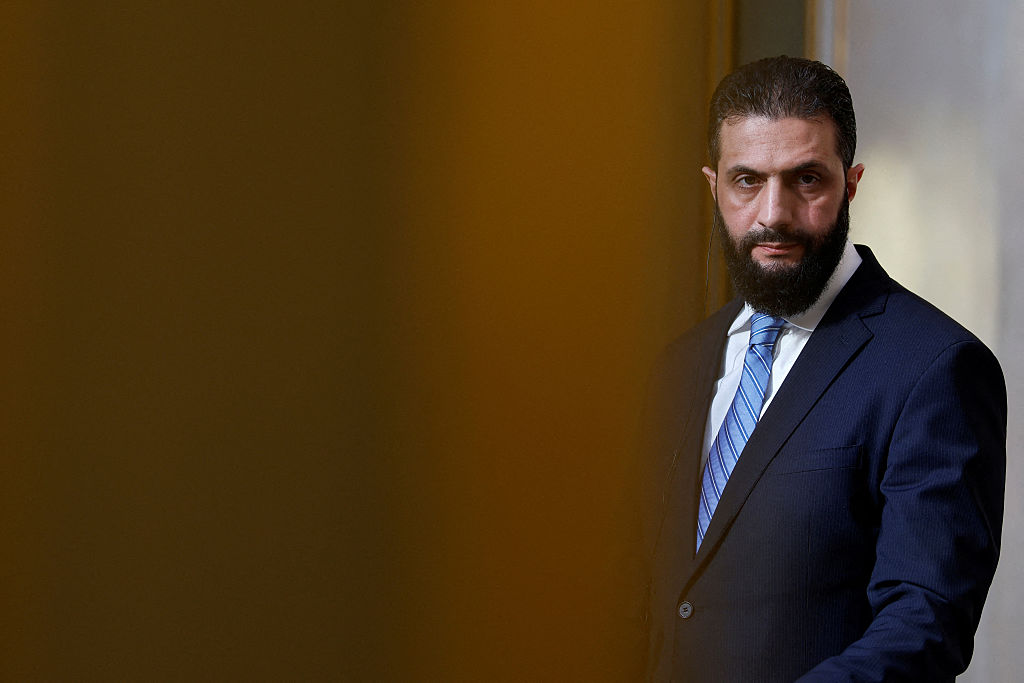
In a candid meeting at Damascus’s People’s Palace, Syrian President Ahmad al-Sharaa shared insights on the complex challenges facing Syria’s stability following the recent toppling of Bashar al-Assad. The conversation with journalists and scholars touched on sectarian conflict, regional dynamics, and the thorny question of how Syrians might share power beyond the capital.
Recent violent clashes between Syrian government forces and Kurdish-led units in Aleppo’s Sheikh Maqsoud and Ashrafieh neighborhoods underscore the fragile state of peace. Although a ceasefire was brokered with discreet assistance from U.S. and Turkish intermediaries, these confrontations spotlight how quickly Syria could relapse into conflict.
The Kurdish communities have been pivotal in steering dialogue towards decentralization and broader representation in Syria’s diverse ethnic and religious landscape. However, this progress is now uncertain as some factions within the Syrian Democratic Forces (SDF) appear to believe they can leverage time to negotiate a more favorable position or even support a regime change in Damascus.
Optimism had marked developments earlier in the year. On March 10, a U.S.-facilitated framework agreement saw SDF leader Mazloum Abdi consent to a year-end deadline to integrate SDF forces into national institutions. The deal, signed by Abdi and al-Sharaa, was lauded as a promising approach to averting violence in eastern Syria. This breakthrough was symbolized by the celebration of Kurdish Nowruz in Damascus, an event unseen under Assad’s decades-long rule.
President al-Sharaa revealed that Turkey, a former ally in Assad’s removal, had initially planned a military campaign to oust the Kurds from the northeast. Understanding the dangers, al-Sharaa halted the operation in favor of dialogue amid concerns that such an intervention could spark prolonged insurgency.
Negotiations since March have centered on rebranding, retraining, and integrating Kurdish forces under a unified command. However, complex issues remain, including the status of roughly 12,000 female Kurdish fighters and limited cultural concessions—such as mere hours of Kurdish language instruction—offered by Damascus.
Damascus accuses Kurdish negotiators of protracted delays, while al-Sharaa advocates for implementing the Assad-era Law 107, promising substantial self-governance to the Kurds. Yet, constitutional amendments reaffirming Syria as an Arab republic and Islamic jurisprudence as a legislative foundation pose significant barriers for secular Kurdish factions.
Momentum for reintegration waned following failed military efforts in Druze strongholds and harsh incidents in Latakia, which fueled skepticism among Kurdish leaders about the regime’s durability. Meanwhile, reports suggest that Israel and the UAE anticipate al-Sharaa’s government will face significant challenges by mid-2026, prompting Kurdish factions to take a cautious stance.
An SDF-led conference in August including diverse Syrian groups was condemned by Damascus as separatist, freezing peace talks in Paris. Nonetheless, renewed diplomatic activity after al-Sharaa’s September U.S. visit and hints at security cooperation with Israel have revitalized dialogue. Senior SDF officials are now reportedly prepared for daily negotiations in Damascus.
Turkey and Syria have expressed impatience, warning that failure to meet integration deadlines could justify military action. Al-Sharaa stressed Turkey’s insistence on resolving the northeast’s status, criticizing delays as “militia thinking” borne from internal factionalism rather than strategic decision-making.
Looking ahead, the SDF faces a critical choice. They can push constitutional reforms toward decentralization securing Kurdish rights and broader governance reforms, or risk renewed clashes by holding out for political shifts in Damascus. The stakes are high: eastern Syria is a powder keg of ethnic tensions, tribal rivalries, and jihadist threats.
The prospect of a flawed but peaceful compromise, supported by inclusive governance from Damascus and pragmatic Kurdish leadership, offers a path to avoid bloodshed and insurgency. Millenium TV will continue to monitor developments closely as all sides navigate this pivotal moment in Syria’s future.
© Millenium TV